下载App
资质规则
旅行
账户

Brun066
An exciting journey through Sri Lanka’s tropical mountain landscape.
Nanuoya to Ella Train Ride的点评
点评:A trip along the “Tea Railway” is rightly renowned as one of the world’s most fascinating train journeys; it offers an up-close view of Sri Lanka’s characteristic tropical mountain scenery, free from the hassle of road noise and congestion.
Thus, the journey isn't merely a means of transport, but an attraction in its own right.
It's worth recalling the origins of this railway, which runs from Colombo, past Ella, all the way to Badulla: it was built by the British colonial government to facilitate the rapid transport of vast tea amounts from the Sri Lankan highlands (arguably the world’s most renowned tea-producing region) to the capital, and from there to the rest of the world. Construction took place in stages over the course of sixty years, between 1864 and 1924; however, the first section — connecting Colombo and Kandy — opened as early as 1867. British authorities viewed its construction as both strategically and symbolically urgent, as it linked the colonial capital (Colombo) with the historic capital (Kandy) of Sri Lanka’s last independent kingdom, which had remained sovereign until 1815. The kings of Kandy had regarded their capital’s secluded nature as a guarantee of their independence and had therefore obstructed the construction of any transport routes. The British, by contrast, had already opened a daring carriage road between Colombo and Kandy in 1832; yet it was the opening of the railway between the two cities in 1867 that reduced the travel time to just four hours.
Of the various sections of the “Tea Railway”, the stretch between Nanu-Oya and Ella is the most popular with tourists; and it's the one we traveled as well. The route is served by trains that — despite consisting of many carriages (perhaps ten, as far as I recall) —run fully packed, at least during the season of our trip (mid-July); it's therefore wise to book, otherwise buy tickets in advance and immediately claim any unreserved seats.
Since the section between Kandy and Nanu-Oya was disrupted by a cyclone and the resulting landslides in 2025, our journey actually began at Nanu-Oya, the station serving nearby Nuwara Eliya (where we had spent the previous night).
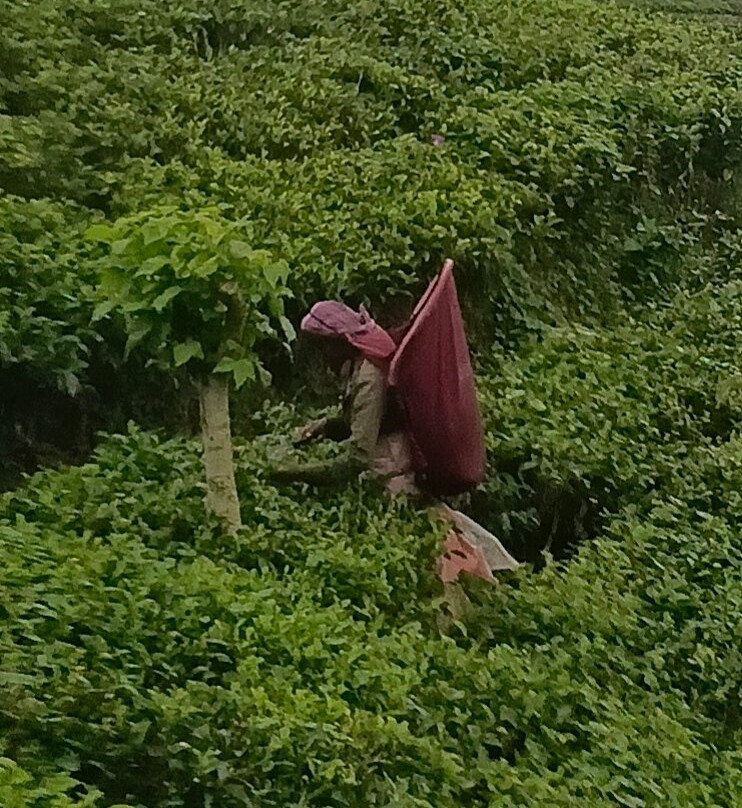
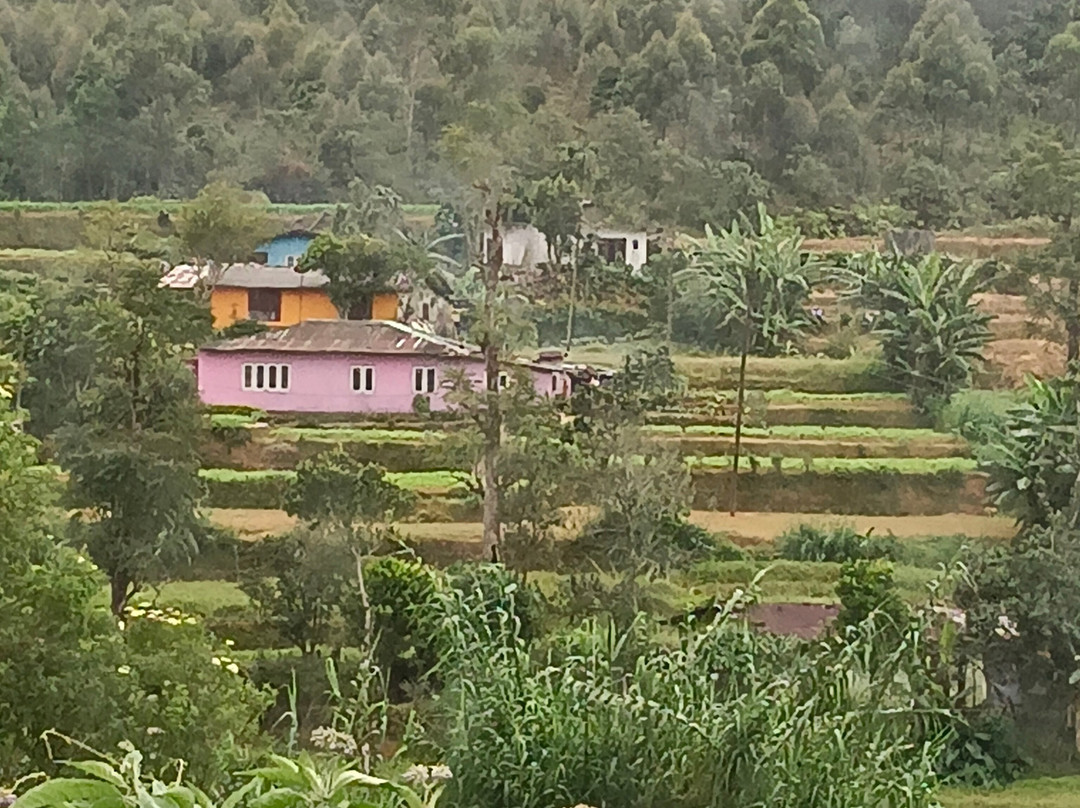
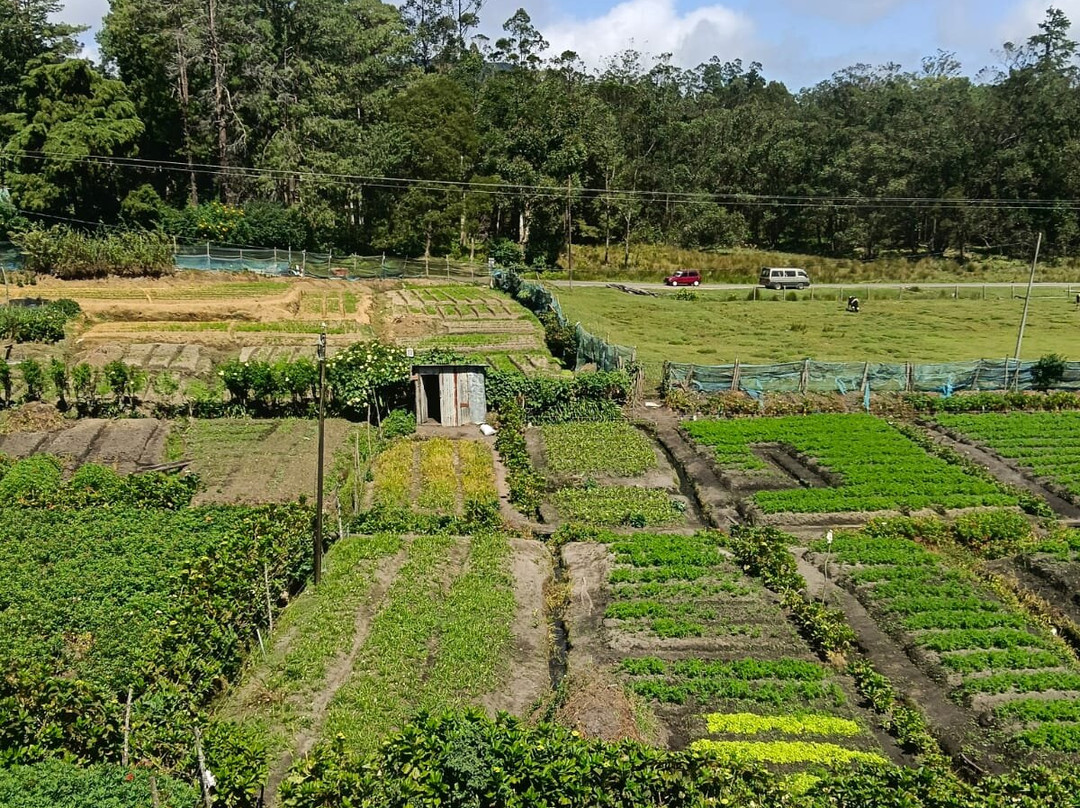
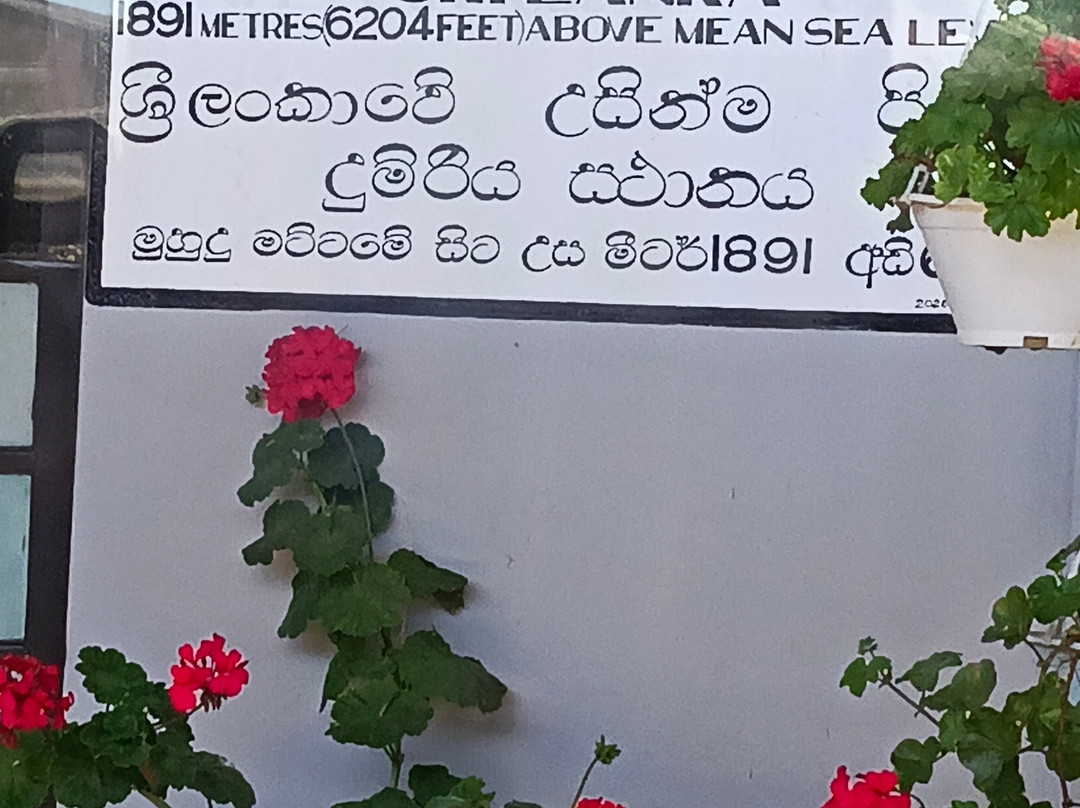
The morning train ride to Ella is scheduled to take 3.5 hours, though in reality, it extended to 4 hours (we arrived around 1 PM). Yet, there is no chance of boredom: the tropical mountain scenery along the route is captivating throughout. At first, the landscape is dominated by neat, attractive tea plantations interspersed with stretches of mountain forest (but also including imported eucalyptus trees). As the train climbs higher — reaching an altitude of 1,900 meters at its peak — patches of forest remain, but the crops (fruit trees and vegetables) shift to varieties typical of temperate zones.
Generally, you don't feel like you are traveling at a great altitude, except in rare instances where the railway skirts a mountainside that sinks hundreds of meters into the valley below.
Upon arrival in Ella, hundreds of passengers disembark, briefly turning what should theoretically be a quiet little mountain station into a chaotic scene. From there, you can set off on new adventures and sightseeing excursions.
翻译:乘坐“茶乡铁路”旅行堪称世界上最迷人的列车之旅之一;沿途可以近距离欣赏斯里兰卡独具特色的热带山地风光,且无需忍受公路上的噪音与拥堵。
因此,这段旅程不仅是一种交通方式,本身更是一处值得体验的旅游景点。
值得一提的是这条铁路的起源——它始于科伦坡,途经埃拉。这条铁路一直延伸到巴杜拉:它由英国殖民政府修建,旨在便于将斯里兰卡高地(堪称世界上最负盛名的茶叶产区)出产的大量茶叶迅速运送到首都,再从那里销往世界各地。铁路的修建分多个阶段进行,历时60年,从1864年持续到1924年;不过,最初的一段线路——连接科伦坡与康提——早在1867年就已通车。英国当局认为这条铁路的修建在战略和象征意义上都至关重要,因为它将殖民地首府(科伦坡)与斯里兰卡最后一个独立王国的历史首都(康提)连接了起来——该王国直至1815年才丧失主权。康提的历代国王一直将首都的偏僻地理位置视为维持国家独立的保障,因此极力阻挠任何交通路线的修建。而英国人则恰恰相反。早在1832年,人们便开通了一条连接科伦坡与康提的冒险之路;然而,真正将两地间的旅行时间缩短至仅四小时的,还是1867年通车的铁路。
在“茶叶铁路”的多个路段中,努奥亚至埃拉这一段最受游客青睐;我们走的也正是这段路线。这条线路上的列车虽然车厢众多(据我记忆大概有十节车厢),却总是满载乘客。至少在我们旅行的季节里(7月中旬);因此提前订票是明智之举,或者至少要提前购买车票并立刻抢占那些未被预订的座位。
由于2025年的一场气旋及其引发的山体滑坡,康提至纳努奥亚之间的铁路段一度中断,所以我们实际上是从纳努奥亚站出发的——该站是通往附近努沃勒埃利耶的车站(我们前一晚就住在那里)。
清晨开往埃拉的火车预计需行驶3.5小时,不过实际上……整个过程持续了4个小时(我们下午1点左右出发)。不过完全不会觉得无聊:沿途的热带山地风光始终令人沉醉。起初,视野中尽是整齐美观的茶园,其间还夹杂着大片的山地森林(也有一些引进的桉树)。随着火车不断向高处攀升——最终抵达海拔1,900米的山顶——森林地带依然存在。不过,种植的作物(果树和蔬菜)则变成了温带地区常见的品种。
一般来说,你不会感觉到自己身处高海拔地区,只有在极少数情况下,铁路线会沿着山壁延伸,而山壁下方则是深达数百米的山谷。
抵达埃拉站后,数百名乘客纷纷下车,使得这个理论上应该安静祥和的小山间车站瞬间变得混乱不堪。从那里开始,。你可以开启新的冒险之旅,也可以去观光游览。

© 2026 Tripadvisor 版权所有。
部分照片由 VFM Leonardo 提供。
TripAdvisor公司对外部网站的内容一概不负责。优惠价格中不含税和其他费用。
ICP证:沪B2-20200433
沪ICP备20013175号
 沪公网安备31010502005427号
鹰程信息技术(上海)有限公司